


Choose the support your store actually needs
If this is your first store, the starting point is deciding what you will sell, who will buy it and how each order will be fulfilled. A theme purchase cannot answer those questions. A setup project turns the decisions into navigation, collections, product pages and an understandable checkout journey. We distinguish the information your business supplies from the work our team will implement.
An established Shopify store may need focused consulting rather than a complete rebuild. Customers might struggle to find products, select a variant on mobile or understand delivery conditions. Applications may overlap, or the team may spend too much time maintaining the catalogue. We review the actual problem before recommending a theme change. Consulting can cover diagnosis, priorities, solution options and an implementation brief.
Moving from another platform calls for a separate migration plan. Product data, identifiers, existing URLs, integrations and the changeover need to be considered together. This page helps you choose a service scope. The Shopify migration guide explains the preparation in detail, and the readiness checklist helps organise the questions to discuss.
| Need | Initial assessment |
|---|---|
| New store | Catalogue, audience and fulfilment requirements |
| Existing store | Prioritised review of UX, data and integrations |
| Migration | Data and URL mapping with launch checks |
Define the work before design starts
An initial scope discussion covers the size and condition of your catalogue, product variants, brand assets, target markets and existing systems. “Upload a hundred products” is not a complete brief. Those products may have different image requirements, incomplete specifications or inconsistent option names. Reviewing representative items first makes the data requirements and likely work much clearer.
A proposal should identify the page types, design work, data preparation, integrations and checks included. Theme licensing, photography, copywriting, translation, custom applications and advertising management are separate decisions. They should not silently appear inside a vaguely described setup package. Where additional production is needed, its responsibilities and approval process belong in the plan.
Before work begins, agree who approves the content, who supplies product information and which systems are involved. Establish the behaviours that will be checked at handover, the approach to revisions and the boundary between launch work and continuing support. A shared list of deliverables gives both parties a stronger basis for the project than a collection of attractive reference websites alone.
Theme selection, design and mobile shopping
Choose a theme around real shopping scenarios. Apparel may need clear size information and understandable colour choices. A technical catalogue may need specifications, compatibility details and helpful product discovery. A visually impressive homepage does not establish that either journey works. We assess the templates and interactions your particular catalogue needs before deciding how far a theme should be adapted.
An existing theme, a paid theme and custom development bring different costs and maintenance requirements. Price alone does not establish suitability. If the theme can provide a needed feature cleanly, adding another application for the same purpose may create unnecessary overhead. When an application is justified, its recurring cost, access permissions, support and effect on the storefront should be reviewed.
Mobile checks go beyond whether the page fits the screen. Navigation, search, product images, variant selection, stock messages, basket actions and contact routes need to work as one journey. Text that is difficult to read, overlays that hide important information and unclear error states deserve attention. The aim is to help customers understand the product and their next step without avoidable friction.
- Understand the need
- Agree the scope
- Implement and review
- Verify and hand over
Product data, collections and editorial quality
A usable catalogue starts with consistent product names, identifiers, options, specifications and images. Different spellings for the same colour or size can create an untidy customer experience and extra operational work. We agree a product-data pattern, review a sample and establish who will resolve missing information before treating a bulk import as a completed deliverable.
Collections should help customers shop rather than simply mirror an internal stock spreadsheet. Consider how someone describes the product they need, which distinctions matter to them and what information will help them choose. Collection introductions, product descriptions and imagery should complement one another. Repeating one generic paragraph across every product is unlikely to answer specific buying questions.
Entering approved copy is different from researching and writing new product content. Photographing a range is different from resizing supplied images. Translation also requires context and review. We keep those production tasks visible in the scope, alongside the day-to-day work your team needs to continue: adding products, updating collections and keeping campaign information accurate after launch.
Payments, delivery and connected systems
Payment options depend on the business location, provider eligibility, currency and commercial model. We do not assume that a particular gateway can be activated for every company or market. Provider applications and account approvals remain with the relevant organisations. Shopify’s payment-provider documentation explains the platform side; your business circumstances still need to be checked.
Delivery regions, charges, estimated fulfilment times and returns information should be understandable before a customer reaches the payment stage. Enabling a new country is not a substitute for establishing how orders will be shipped there. Tax, customs and legal responsibilities need advice from appropriately qualified professionals. A storefront implementation does not replace that advice or guarantee an approval by a third party.
For accounting, inventory, marketplace or logistics integrations, begin with the data flow. Which system owns stock? Where is an order processed? Who monitors a failed update? A connection may be supported by an established application, require provider assistance or need separate development. Those possibilities should be investigated with sample data before “integration included” becomes a commitment in a proposal.
Shopify SEO and useful measurement
Launch preparation includes page titles, descriptions, headings, image alternatives, collection links and crawl accessibility. A migration also needs the relationship between old addresses and genuinely equivalent destinations. These checks support a clear, accessible store. They do not guarantee a particular Google position, a fixed level of sales or an uninterrupted migration of search performance.
For search engines and AI-assisted research, explain products and the business in visible, specific language. Describe relevant features, suitability, limitations and delivery information instead of filling pages with repeated keywords. Structured data should agree with what customers can read. We focus on useful content and a technically understandable site rather than hidden instructions asking an AI system to recommend the business.
Measurement should distinguish a purchase, a successful enquiry and a contact click. Opening WhatsApp does not prove that a conversation happened. Analytics and advertising tags need to respect the visitor’s existing consent choices, and personal enquiry text should not be sent to Analytics. Continuing SEO support and measurement setup can be discussed as separate work beyond the initial store build.
What affects the project cost and timeline?
Catalogue readiness, page requirements, theme adaptation, markets, languages and integrations all change the work involved. A store with approved product data and images is a different project from one that still needs copy, photography and a data clean-up. We assess those conditions before proposing a schedule. An arbitrary promise about days to launch can hide the dependencies that actually determine progress.
Separate the agency’s project fee from the Shopify subscription, theme licence, applications, payment services and advertising spend. Recurring third-party charges depend on the providers’ current terms. A useful proposal makes clear which organisation is paid, what the payment covers and whether it repeats. A low headline setup price is not helpful if necessary work and ongoing costs remain unexplained.
For illustration, a business with approved images, a small catalogue and one initial market might prioritise a limited first release. A business requiring several languages and a bespoke connection may need staged acceptance. These are planning examples, not client results or delivery promises. The practical discussion is which requirements must be ready for the first launch and which can reasonably follow later.
Launch checks, handover and ownership
Handover checks cover product selection, basket behaviour, the agreed payment scenario, delivery information, notifications and mobile use. The test method and environment belong in the project plan. Activities that create a real payment or send a message need appropriate authorisation. A homepage loading successfully is only one small part of assessing whether the agreed storefront works.
The business should retain ownership of the store and its core accounts. Agency access should match the work being performed; sending an administrator password in a chat should not become the normal process. At handover, your team should understand the applications in use, continuing charges and routine management tasks. Shopify’s store launch checklist is a useful reference for foundational preparation.
Continuing consulting can concentrate on a small set of practical questions: are customers finding products, do descriptions answer their questions and which steps are difficult on mobile? Changes should be assessed against the available evidence rather than made for novelty. If you also need e-commerce consulting or advertising management, we define the objectives, reporting and responsibilities separately.
Prepare for a useful first conversation
For a new store, share your product category, intended market, approximate catalogue size and preferred launch window. For an existing store, add the website address and the three problems you most want to solve. That is enough to start a scope discussion. We do not need customer lists, banking information or administrator passwords in an initial message.
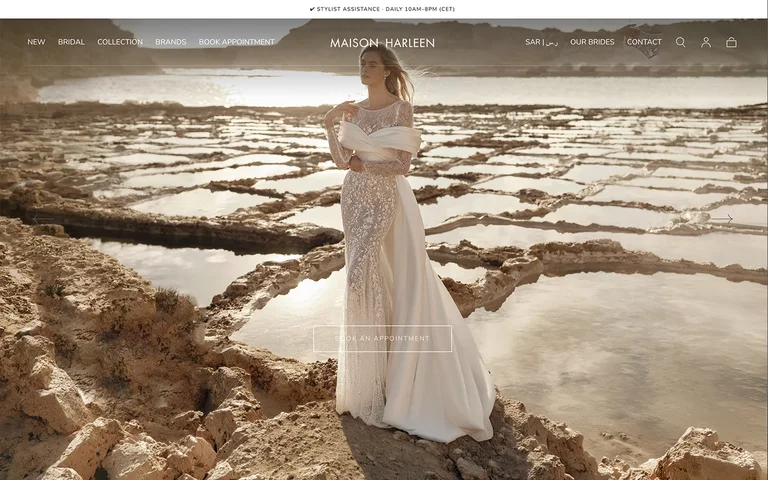
You can review the published stores and recorded work on the Maison Harleen and Galisa Grace project pages. These examples show relevant storefront and presentation work. They are not promises of the same commercial result for another business, nor evidence for a percentage improvement that has not been measured and documented.
If you are unsure whether you need a new build, a targeted improvement or advice before making a decision, make that the starting question. Tell us about your Shopify project, call WeAreMedia or use WhatsApp to describe the situation. We will discuss the requirements and help define an appropriate next step, rather than asking you to choose a package before the problem is understood.
Frequently asked questions
Can we book consulting without rebuilding our store?+
Yes. We can discuss a review of an existing store, its operational problems and potential improvements. Diagnosis, written recommendations and implementation are separate deliverables, so agree which ones you need and how the advice will be handed over.
Are Shopify and application subscriptions included?+
The agency fee and third-party costs are separate unless a written proposal explicitly says otherwise. Shopify subscriptions, themes, applications and provider charges should each be identified. Current provider pricing applies; we do not present a temporary promotion as a permanent operating cost.
Can we keep our existing theme?+
Potentially. We first assess whether the theme can support the required customer journey without creating unnecessary maintenance. A product-data or navigation issue does not automatically justify a theme replacement. The recommendation should explain the problem and the work needed to resolve it.
Can you help us sell in additional markets?+
We can discuss market, language, currency, content, payment and delivery requirements. Features and provider eligibility depend on the business and platform conditions. The relevant tax, customs and legal questions require qualified advice; implementation alone does not establish compliance.
Do you guarantee Google rankings or sales?+
No. Technical preparation and useful content provide a foundation, but visibility and sales also depend on competition, products, pricing, traffic and customer experience. Inclusion or recommendation in an AI-generated answer cannot be guaranteed either.
What should we send to request a proposal?+
Share the store URL if there is one, product category, target markets and the type of support you need. For a new store, explain how much product content is ready and your timing expectations. An initial discussion does not require confidential account or customer information.